OpenAI just made a bold move that signals something much bigger than a single hire. The company has poached the chief of Uber India to lead its operations in the country — its largest market outside the United States. This isn’t just a staffing decision. It’s a strategic declaration that OpenAI is serious about dominating one of the world’s fastest-growing AI ecosystems. And if you’re someone who uses AI tools to build income online, this development deserves your full attention.
Why India Is OpenAI’s Most Important Bet Right Now
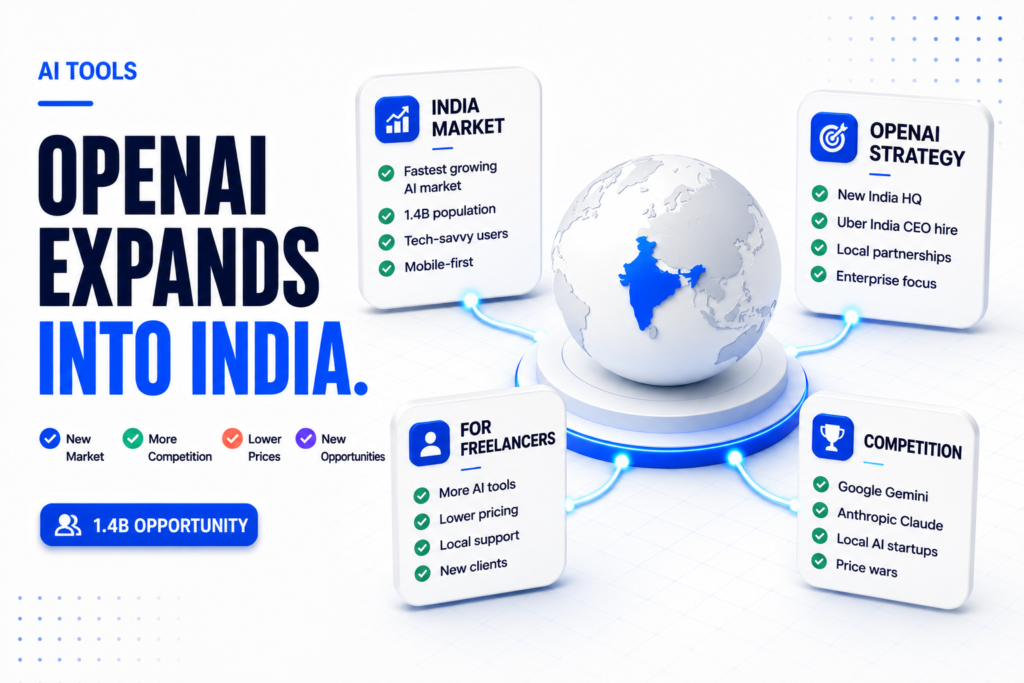
India has become a critical battleground for every major AI company. With over 1.4 billion people, a booming tech-savvy middle class, and one of the highest rates of smartphone adoption globally, the opportunity is immense. OpenAI has been quietly expanding its presence there — opening new offices, forging local partnerships, and now making a high-profile leadership hire to anchor the effort.
The choice of an Uber executive is telling. Uber didn’t just survive in India — it had to compete against deeply entrenched local players like Ola in one of the most price-sensitive, complex markets in the world. Hiring someone with that kind of operational DNA suggests OpenAI isn’t planning a soft launch. They’re preparing for a full-scale push.
According to TechCrunch, this hire marks OpenAI’s latest move in a broader India strategy that includes expanding offices, deepening partnerships, and scaling up local hiring. The company clearly sees India not as a secondary market but as a primary growth engine.
What This Means for the Global AI Tools Landscape
When OpenAI doubles down on a market this large, the ripple effects touch everyone — not just users in India. Here’s why:
More Competition Drives Better Products
India’s entry into the core of OpenAI’s strategy will intensify competition with local and global AI players. Google’s Gemini, Anthropic’s Claude, and a wave of Indian AI startups are all competing for the same users. That competition is already producing faster product development, lower pricing, and more specialized tools. If you’re a freelancer or creator relying on AI tools to earn income, this environment works in your favor. For a deeper look at how the top AI assistants stack up right now, check out this breakdown of ChatGPT vs Claude vs Gemini.
Localization Will Unlock New Niches
One of the biggest outcomes of OpenAI’s India expansion will be deeper localization — multilingual support, regional content models, and products tailored to local workflows. For content creators and digital entrepreneurs, this opens entirely new market segments. Think about what it means to build AI-powered content businesses targeting Hindi, Tamil, Bengali, or Telugu-speaking audiences at scale. The tools to do this are coming faster than most people realize.
Enterprise Partnerships Will Create New Ecosystems
OpenAI’s India push isn’t just consumer-facing. The company is actively building enterprise partnerships with Indian tech firms, government agencies, and educational institutions. According to OpenAI’s official communications, their global expansion strategy is designed to embed AI into critical infrastructure sectors. For freelancers and small business owners, these partnerships often produce API access, reseller programs, and integration opportunities that smart entrepreneurs can monetize.
How to Position Yourself as OpenAI Scales Globally
The real question for readers of this blog isn’t just “what is OpenAI doing?” — it’s “how do I benefit from it?” Here are three concrete ways to take advantage of this moment.
1. Get Ahead of Emerging Markets with AI Content
As OpenAI improves its multilingual capabilities and targets Indian users, there’s a window right now to build content businesses around underserved language markets. AI writing tools are already capable enough to produce high-quality content in multiple languages. If you haven’t explored how to monetize this yet, our guide on how to use ChatGPT to make money as a freelancer walks through exactly how to turn that capability into real income.
2. Build Digital Products for a Billion-User Market
India’s expanding AI ecosystem represents a massive addressable market for digital products — from AI-generated templates and courses to niche automation tools and creative assets. The infrastructure OpenAI is building will make it easier to reach and serve these users. If you’re not already thinking about how to create and sell digital products with AI, now is the time to start. Our comprehensive guide on creating and selling digital products with AI covers the full playbook.
3. Watch for New API Pricing and Partnership Tiers
Historically, when OpenAI enters a new market aggressively, it adjusts pricing and partnership structures to drive adoption. That often means lower API costs, new developer programs, and localized enterprise deals. If you’re building products or automations on top of OpenAI’s API, this is worth watching closely. Better pricing in key markets tends to lower costs across the board over time.
For those looking at the broader freelance AI opportunity, Statista projects the Indian AI market to grow at a compound annual rate of over 25% through 2027 — making it one of the fastest-expanding AI economies in the world.
The Bigger Picture: AI’s Center of Gravity Is Shifting
For years, conversations about the AI industry have been dominated by Silicon Valley, with occasional nods to China and Europe. But OpenAI’s aggressive India expansion — a dedicated leadership hire, new offices, and a stated commitment to making India a flagship market — tells a different story. The center of gravity for AI adoption is shifting, and it’s shifting fast.
For entrepreneurs, freelancers, and creators who use AI tools to build income, this is fundamentally good news. More investment means better tools. More competition means lower prices. More users means bigger markets. And a more globally distributed AI ecosystem means more opportunities to carve out a niche, build an audience, and turn AI skills into sustainable income — regardless of where you are in the world.
The hire of Uber India’s chief isn’t just a business story. It’s a signal. And if you’re paying attention, it’s telling you that the AI economy is about to get a lot bigger.