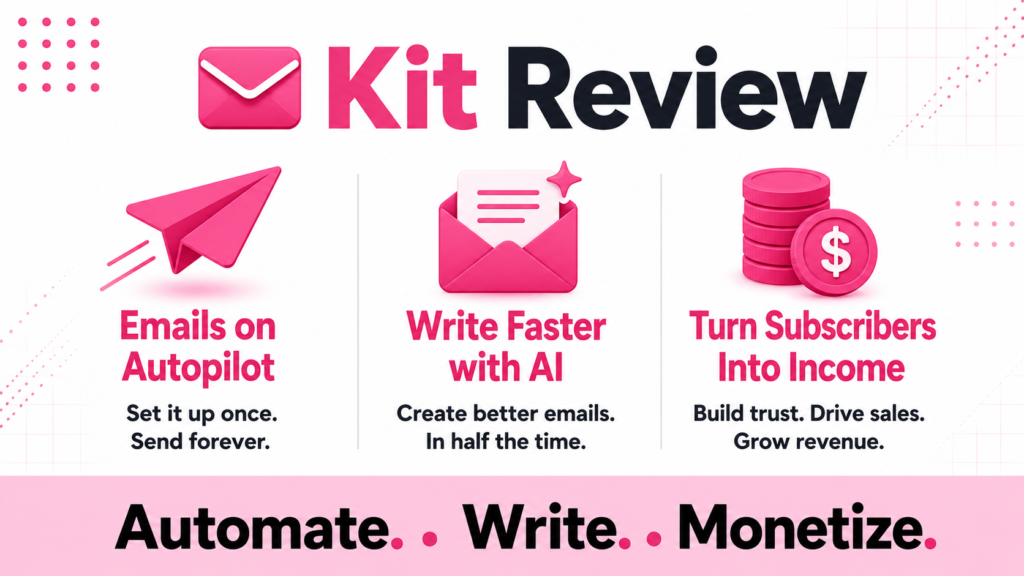
Kit, formerly known as ConvertKit, is one of the top email marketing platforms for creators in 2026. This Kit review covers pricing, features, AI tools, and whether it beats the competition. However, not every creator needs the same features. As a result, this guide breaks down exactly who Kit works best for.
Email marketing remains one of the highest-ROI channels for creators. Consequently, choosing the right platform matters more than most people realize. Kit built its entire reputation on serving bloggers, YouTubers, and newsletter writers. Therefore, it approaches email differently than generic marketing tools like Mailchimp.
What Is Kit (ConvertKit)?
Kit is an email marketing platform designed specifically for creators. The company rebranded from ConvertKit to Kit in 2024. Since then, it has expanded into a broader creator monetization suite.
The platform focuses on three core areas: email newsletters, landing pages, and automation. In addition, Kit now includes a built-in Creator Network and commerce features. This makes it more than a simple email tool.
Unlike traditional email software, Kit organizes contacts as subscribers with tags rather than static lists. This structure gives creators more flexibility. Furthermore, it makes segmentation significantly easier for non-technical users.
Key Features of Kit in 2026
Visual Automation Builder
Kit’s automation builder uses a visual, drag-and-drop canvas. Creators can map out entire email sequences without writing any code. As a result, welcome sequences and sales funnels become simple to build.
Automations trigger based on subscriber behavior, such as link clicks or form signups. Moreover, conditional logic lets creators branch sequences based on subscriber interests. This level of control rivals platforms costing far more.
AI-Powered Writing Assistance
Kit includes AI features that help creators write subject lines and email content faster. The AI suggests improvements based on open rates and engagement patterns. Therefore, creators spend less time staring at a blank page.
These AI tools do not replace a creator’s voice entirely. Instead, they act as a starting point for drafts. Consequently, most users still edit the output before sending. If you want more options here, our best AI writing tools guide covers dedicated writing assistants worth pairing with Kit.
Landing Pages and Forms
Kit offers dozens of customizable landing page templates. These pages convert well because they are built specifically for list growth. In addition, forms can be embedded directly into blog posts or websites.
Every landing page integrates with Kit’s tagging system automatically. This means new subscribers get sorted correctly from the very first click. As a result, segmentation happens without manual work.
Creator Commerce Tools
Kit now supports selling digital products and paid newsletters directly through the platform. Creators can charge for subscriptions or one-time digital downloads. However, transaction fees apply on the free and lower-tier plans.
This commerce layer positions Kit as a monetization hub, not just an email tool. Therefore, creators can manage audience growth and revenue in one place. Many newsletter writers use this feature as a primary income source. For a broader look at this approach, see our guide on how to create and sell digital products with AI.
Kit Pricing in 2026
Kit offers a free plan for up to 10,000 subscribers with limited automation features. This makes it one of the most generous free tiers in the industry. However, the free plan lacks advanced automation and some integrations.
Paid plans start around $25 per month and scale based on subscriber count. The Creator plan unlocks full automation and integrations. Meanwhile, the Creator Pro plan adds advanced reporting and subscriber scoring.
Pricing increases as your list grows, which is standard across email platforms. Nevertheless, Kit remains competitively priced compared to Mailchimp and ActiveCampaign at similar list sizes.
Kit vs Competitors
| Feature | Kit (ConvertKit) | Mailchimp | Beehiiv |
|---|---|---|---|
| Best for | Creators, newsletters | Small businesses | Newsletter monetization |
| Free plan | Up to 10,000 subscribers | Up to 500 subscribers | Up to 2,500 subscribers |
| Automation | Visual builder, strong | Basic to moderate | Growing, improving |
| Commerce tools | Digital products, paid newsletters | Limited | Strong, ad network |
| Ease of use | Very beginner-friendly | Moderate learning curve | Beginner-friendly |
Kit wins for creators who want an all-in-one platform with strong automation. Meanwhile, Beehiiv appeals more to writers focused purely on newsletter monetization. Mailchimp, on the other hand, suits small businesses needing broader marketing tools. If you’re comparing options as a solo creator, our best AI tools for freelancers roundup covers adjacent picks too.
Pros and Cons
Pros:
- Generous free plan for up to 10,000 subscribers
- Beginner-friendly visual automation builder
- Built specifically for creators and newsletter writers
- Strong deliverability rates
- Integrated commerce and paid newsletter tools
Cons:
- Pricing rises quickly at higher subscriber counts
- Design templates are simpler than some competitors
- Transaction fees apply to commerce features on lower plans
Who Should Use Kit?
Bloggers, YouTubers, and podcasters benefit the most from Kit’s creator-first design. Additionally, newsletter writers who want to monetize directly through subscriptions will find strong value here. Small business owners may prefer alternatives with more traditional marketing features.
Freelancers building a personal brand also do well with Kit. The platform simplifies lead magnets, welcome sequences, and audience segmentation. Therefore, it saves significant setup time compared to more complex tools.
Final Verdict
Kit remains one of the best email marketing tools for creators in 2026. Its combination of automation, AI assistance, and commerce features creates real value. However, businesses needing heavy e-commerce integrations may want to look elsewhere.
Overall, Kit earns its reputation as a creator-focused platform. As a result, it is a strong choice for anyone building an audience through email in 2026.
Frequently Asked Questions
Is Kit free to use? Yes, Kit offers a free plan for up to 10,000 subscribers with limited automation features.
Did ConvertKit change its name? Yes, ConvertKit rebranded to Kit in 2024 and expanded into creator commerce tools.
Is Kit good for beginners? Yes, Kit’s visual automation builder and templates make it accessible for non-technical creators.